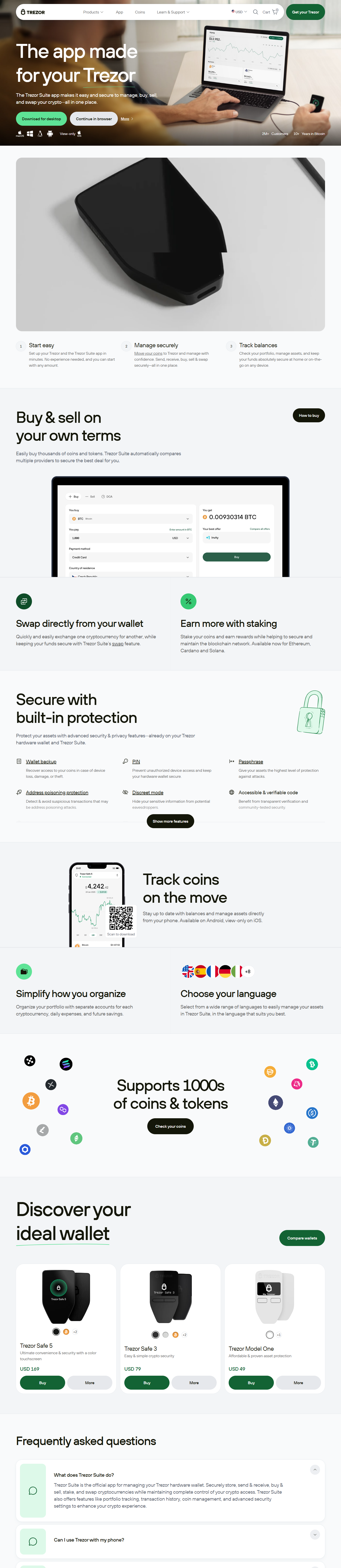
Welcome to the official Trezor setup guide. This guide will walk you step by step through setting up your Trezor hardware wallet securely and efficiently. Trezor is a leading hardware wallet for cryptocurrencies, designed to provide maximum security for your digital assets.
Step 1: Unboxing Your Trezor
Upon receiving your Trezor device, carefully unbox it and ensure all components are present. You should have the Trezor device, USB cable, recovery card, and user manual. Inspect the packaging for tampering. Trezor devices come with tamper-evident seals; do not use the device if the seal is broken.
Step 2: Connecting Your Trezor
Connect the Trezor to your computer using the provided USB cable. Navigate to https://trezor.io/start. This official website will guide you through the setup process. Never download setup software from unverified sources to avoid security risks.
Step 3: Installing Trezor Bridge
Trezor Bridge is a small software that enables communication between your Trezor device and web browser. Download the correct version for your operating system (Windows, MacOS, Linux). Follow on-screen instructions to install and run Trezor Bridge. Once installed, your device should be recognized by the website.
Step 4: Creating a New Wallet
Choose "Create a New Wallet" to generate a fresh wallet. Your Trezor will create a unique 24-word recovery seed. This seed is your ultimate backup; write it down on the provided recovery card and store it securely offline. Never share your seed with anyone.
Step 5: Setting Up a PIN
Set a strong PIN code for your Trezor device. This PIN protects your wallet from unauthorized access. Follow the device prompts to enter and confirm your PIN. Each entry is randomized on-screen, enhancing security against keyloggers.
Step 6: Backup and Recovery
After creating your wallet and setting the PIN, your Trezor will display the 24-word recovery seed. Carefully write down each word in order. This seed allows you to recover your wallet in case your Trezor is lost or damaged. Store the backup in a safe location, separate from the device itself.
Step 7: Adding Cryptocurrency Accounts
Once your Trezor is ready, add cryptocurrency accounts through the Trezor Suite interface. Supports multiple cryptocurrencies like Bitcoin, Ethereum, and many altcoins. Follow on-screen instructions to add each account and start managing your digital assets securely.
Step 8: Making Transactions
Sending and receiving cryptocurrency with Trezor is straightforward. To receive, copy your wallet address and share it with the sender. To send, enter the recipient's address and confirm the transaction on your Trezor device. Every transaction requires physical confirmation on the hardware, ensuring your funds are protected.
Step 9: Firmware Updates
Regularly update your Trezor firmware to benefit from the latest security enhancements. Check the Trezor website or Trezor Suite for firmware notifications. Follow the update instructions carefully; never disconnect the device during the process.
Step 10: Best Security Practices
Always verify the URLs you visit, avoid public Wi-Fi for transactions, and never share your recovery seed or PIN. Consider using additional passphrases for enhanced security. Your Trezor wallet is most secure when combined with good digital hygiene.
This guide provides a comprehensive overview of starting with Trezor.io. Following these steps will ensure a safe and smooth experience managing your cryptocurrency. With Trezor, your digital assets are under your control, protected by industry-leading security measures.